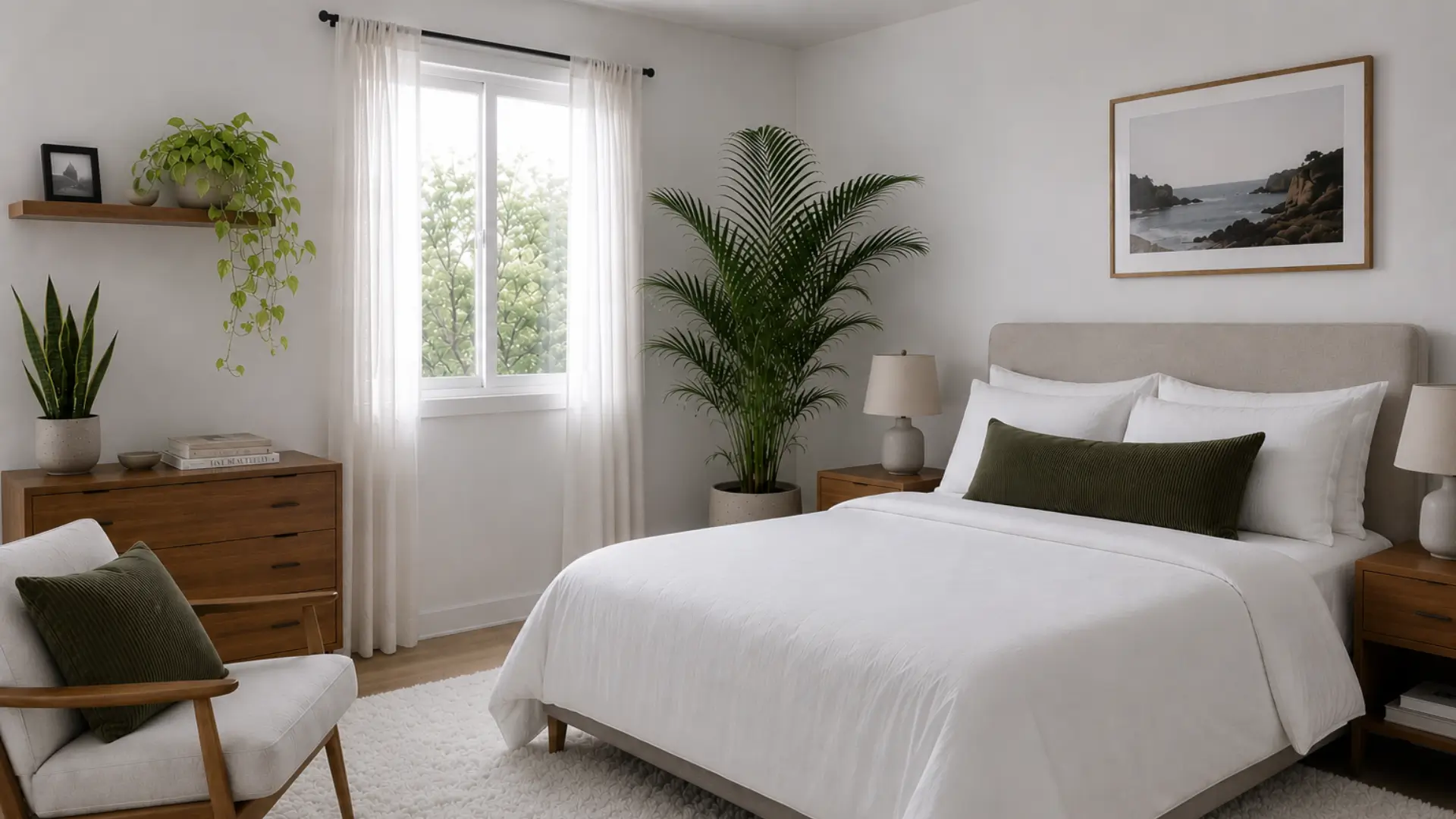
Adding plants to your bedroom can help create a calmer, more relaxing sleep space. Not only do plants improve the overall aesthetic of an indoor environment, but they can also make your room feel more inviting and cosy, promoting peaceful sleep.
Whether you’re working with low light, limited space, or want something easy to care for, there are plenty of plants that suit indoor conditions. Below, we’ve curated some of the best plants for bedrooms, focusing on low-maintenance options that tolerate indoor environments in most Australian homes.
Jump to:
Top recommended bedroom plants
Snake Plant
Snake plants (or sansevieria) are one of the most popular bedroom plants thanks to their ability to survive in low light and minimal watering. They’re ideal for bedrooms with limited sunlight.
Why it works well in bedrooms:
Thrives in low light
Very low maintenance
Upright growth suits small spaces
Peace Lily
Peace lilies are known for their elegant white flowers. They’re a great choice if you want something visually calming, but they are happiest away from air conditioning or heating.
Why it works well in bedrooms:
Prefers indirect light
Suited to humid environments
Adds a soft, calming look to the room
Aloe Vera
Aloe vera is a hardy succulent that requires very little care. It’s commonly recommended for bedrooms due to its compact size and ability to thrive indoors.
Why it works well in bedrooms:
Low water requirements
Compact and easy to place
Prefers bright, indirect light
Spider Plant
Spider plants are hardy indoor plants that suit a wide range of Australian homes. They prefer bright, indirect light but can tolerate lower-light conditions.
Why it works well in bedrooms:
Easy to care for
Tolerates varied light conditions
Trailing growth suits shelves and hanging planters
Golden Pothos
Golden pothos is one of the easiest indoor plants to care for. Its trailing vines make it ideal for shelves or hanging planters, especially in smaller bedrooms.
Why it works well in bedrooms:
Extremely hardy and forgiving
Tolerates low light
Helps soften bedroom spaces visually
English Ivy
English ivy is often chosen for elegant appearance and trailing growth. It works well in cooler bedrooms with indirect light.
Why it works well in bedrooms:
Performs well indoors
Trailing style suits shelves and ledges
Low maintenance when placed correctly
Areca Palm
If you have more space, an areca palm can make a beautiful statement. It’s known for adding moisture to the air and bringing a relaxed, tropical feel to bedrooms.
Why it works well in bedrooms:
Helps increase humidity
Visually softens larger rooms
Thrives in bright, indirect light
ZZ Plant (Zanzibar Gem)
ZZ plants are ideal for bedrooms with very low light. They require minimal watering and are exceptionally forgiving, making them well suited to novice caretakers.
Why it works well in bedrooms:
Extremely low maintenance
Tolerates very low light
Perfect for busy households
Tips for choosing bedroom plants
Choosing the right bedroom plant depends on the conditions of your room and the level of care the plant requires. The best choice will depend on your room’s natural light, temperature, airflow and available space.
Light conditions
In Australian homes, north-facing windows generally receive the most light, while south-facing rooms tend to be shadier. Many popular indoor plants prefer bright, indirect light, and strong direct sun can scorch sensitive leaves, particularly during the warmer months. You may need to move plants further from the window as the seasons change.
Placement
Smaller plants suit bedside tables, low shelves and windowsills, while trailing varieties can work well in hanging planters or higher shelves. Keep plants away from heaters and air-conditioning vents, where sudden temperature changes and dry air can cause stress.
Airflow
Good airflow and drainage will also help plants thrive. Avoid leaving pots sitting in water, and check the potting mix before watering rather than following a rigid schedule, as plants generally need less water during cooler months.
Safety
If you have children or pets, check whether a plant is toxic before bringing it into the bedroom. Some popular indoor varieties can be harmful if eaten, so choosing a pet- and family-friendly option may be the safest approach.
Why plants are great for bedrooms
Plants can help transform a bedroom into a calmer, more comfortable and inviting space. Their natural colour and texture bring softness and warmth to the room, which can be particularly effective in minimalist or neutral interiors. Even a small plant on a bedside table or shelf can make the space feel more considered and welcoming.
They can also contribute to the sense of relaxation we associate with the bedroom. Bringing elements of nature indoors can help create a more peaceful atmosphere and provide a visual cue to slow down at the end of the day. Caring for plants can even become part of a simple evening or morning routine.
While greenery alone won’t determine how well you sleep, they can form part of a bedroom environment designed around comfort and rest. When combined with soft lighting, comfortable bedding and a supportive mattress, greenery can help create a space that feels balanced, restful and distinctly your own.
Frequently asked questions
Which plant is best for a bedroom?
Popular bedroom plants include snake plants, peace lilies, aloe vera, and ZZ plants, as they’re low maintenance and suitable for indoor, low-light conditions.
Is it a good idea to have plants in your bedroom?
Yes, many people find that bedroom plants help create a calmer, more relaxing environment and improve the overall feel of the space.
What is the best plant for humid bedrooms?
Peace lilies are a great choice for humid bedrooms, as they naturally prefer warm conditions similar to their tropical habitat. They thrive in bright, indirect light and can tolerate lower-light rooms.
What plants are safe for bedrooms?
Low-maintenance indoor plants such as snake plants, pothos, areca palms, and ZZ plants are generally well suited for bedrooms. If you have pets or children, always check plant safety before buying.