Woman sleeping under duvet

Duvets (or doonas) are a popular bedding choice in Australian homes thanks to their soft, cosy feel and versatility across seasons. Available in a wide range of fillings and fabrics, a duvet can enhance both comfort and bedroom style, making it a practical and aesthetic addition to your sleep setup.

Because Australia experiences a mix of climates, from humid summers to chilly winters, choosing the right duvet is key to getting a good night’s sleep and staying comfortable throughout the night. Below, we break down different duvet types, how they compare to quilts and comforters, and what to look for when selecting the right option for your home.

What is a duvet (or doona)?

A duvet is a soft insert filled with down, feathers, natural fibres or synthetic blends. It serves as the top layer of bedding, keeping you warm and comfortable throughout the night. A duvet is usually enclosed in a removable cover, which makes it easy to clean and swap out for seasonal styling.

Originating in Europe, the word duvet comes from the French term for “down”. In Australia, the name “doona” is used interchangeably, but both refer to the same item. Doona stems from the Danish word for eiderdown, “dyne”, pronounced du-neh. It was used as a generic trademark in the 1970s for a brand of duvet, and the word has since evolved into a standard term in Australian English.

What’s inside a duvet?

The filling of a duvet determines its warmth, weight and comfort. Here are the most common types:

Natural fills

  • Down or feather: Filled with duck or goose down and feathers. These duvets are lofty and insulating, making them ideal for cooler climates or winter use.
  • Wool: Naturally insulating and moisture-wicking, but can feel too warm in especially humid regions on account of its density.
  • Bamboo or silk: Lightweight, breathable and naturally temperature-regulating. Well suited to warmer climates, though silk is often more premium in price and care.
  • Tencel or lyocell: Smooth, breathable and ideal for sensitive skin. Its moisture-wicking properties are great for humidity, and it also performs well in warmer weather.

Synthetic fills

  • Down alternative: Synthetic fibres designed to mimic the softness of down. A good option for allergy sufferers looking for a hypoallergenic alternative.
  • Microfibre: Soft, lightweight and easy to care for. Offers a down-like feel and is generally machine washable.
  • Polyester: Durable, affordable and easy to maintain. While practical, these fillings may not be as breathable or long-lasting as natural options.
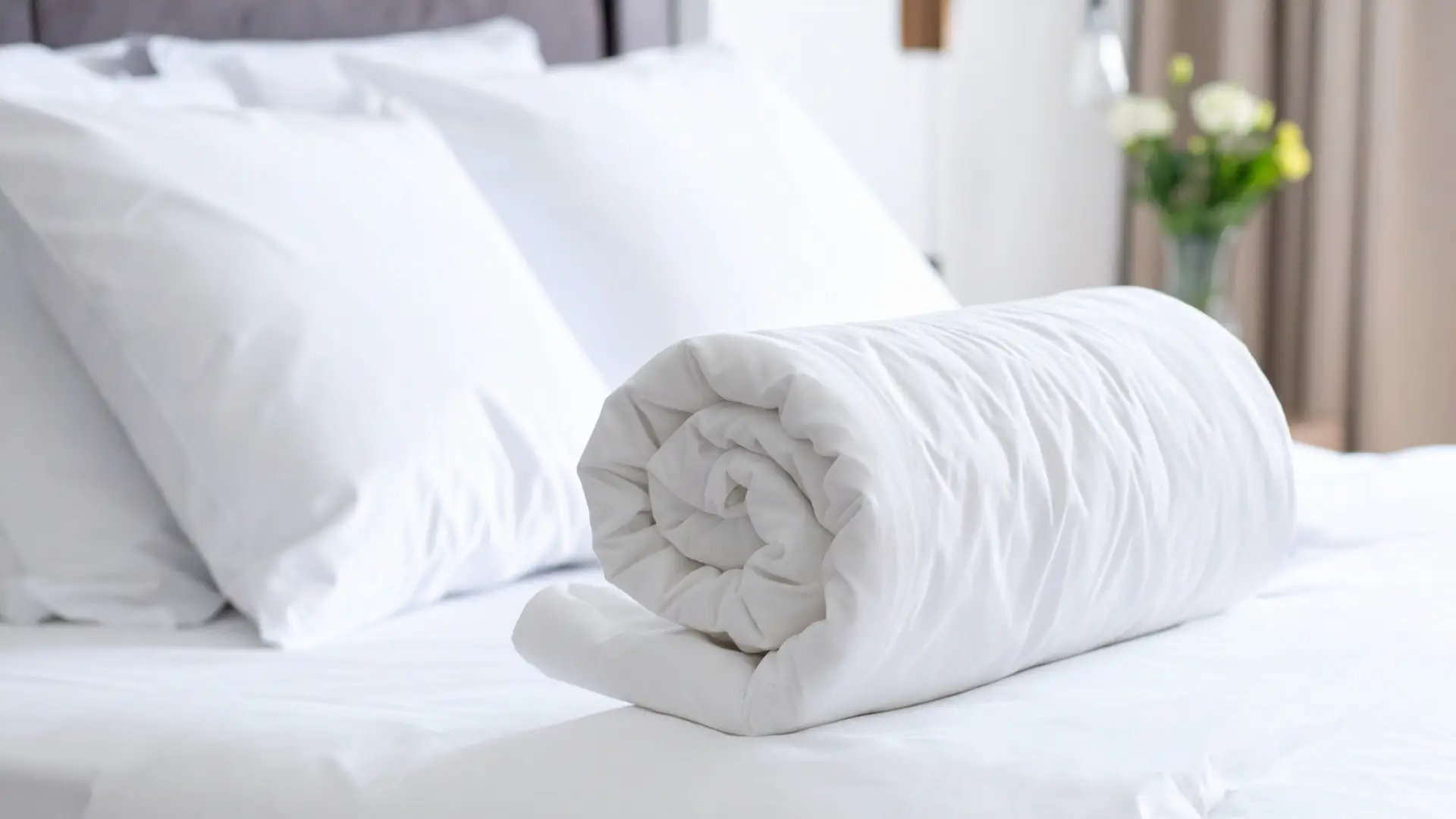
Rolled up duvet on a bed

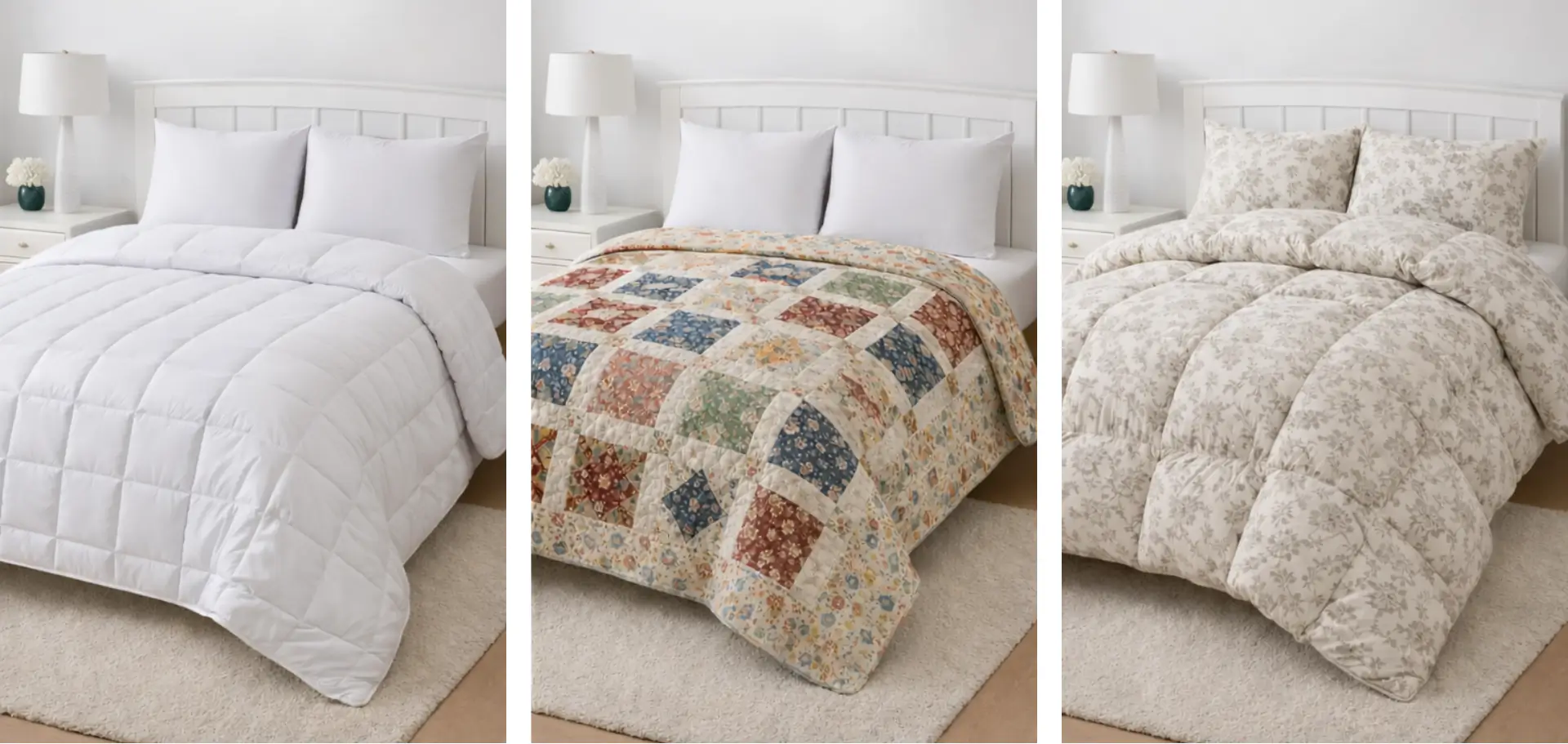
Duvet vs doona vs quilt vs comforter

These terms are often used interchangeably, especially in Australia, where a “quilt” is often used to mean a duvet or doona. You may find that international uses of the words vary, but they traditionally refer to different types of bedding.

Bedding type Structure Warmth & weight Ease of care Typical use
Duvet
Insert with removable cover
Customisable by fill
Removable cover
Daily bedding
Doona
Australian term for duvet
Same as duvet
Same as duvet
Same as duvet
Quilt
Stitched decorative layers
Moderate warmth
Machine-washable
Decorative topper
Comforter
Pre-filled, cover attached
Generally warmer and thicker
Wash whole item
Guest suites, hotels

While all options provide warmth, the duvet (or doona) stands out for its flexibility. The removable cover allows for easier maintenance and seasonal adjustments, making it a versatile choice for year-round comfort.

How to choose the right duvet for you

The best choice of duvet depends on the climate where you live, your general comfort preferences, and whether you have allergies or skin sensitivities.

Breathability and seasonal comfort

If you live in a warmer region, opt for cooling materials and lightweight duvets with moisture-wicking or temperature-regulating properties. Heavier duvets (like down or wool) are better suited to winter or cooler climates. For year-round comfort, a lightweight or all-season option is often the most versatile.

While individual products vary, this general guide can help:

  • Warm climates or summer: Bamboo, Tencel, silk
  • All-season use: Down alternative, microfibre
  • Cooler climates or winter: Down, feather, wool

Some families use the same duvet year-round, while others swap out summer duvets for winter ones, and vice versa. If you tend to sleep with air conditioning or fans during summer, a warm or heavy duvet may be preferable for the added weight and cosy comfort without risking overheating.

Allergy-friendly options

If you suffer from allergies, asthma or skin sensitivities, it is better to opt for a duvet made with hypoallergenic fillings and materials. These include bamboo, Tencel, microfibre and synthetic down (or down alternative). Ensure your chosen duvet (or its cover) is 100% hypoallergenic rather than fibre blends that may include allergens.

Practical considerations

Some duvets are machine-washable and thus better suited to humid climates where sweating at night is more likely and more frequent. Look for duvets that allow for regular cleaning and washing for convenience and longer-lasting quality.

It’s also important to consider the size of your duvet. Some opt for a duvet one size larger than their mattress for added luxury and extra room when sharing with a partner. If you do choose a larger size, ensure the duvet cover is an appropriate size to accommodate the duvet itself.

Bed with duvet and pillows no covers

Questions often asked about duvets

What is a doona?

In Australia, a doona is another way of referring to a duvet. Both terms describe the same bedding item: a filled insert with a removable cover.

What is a quilt?

In Australia, the term “quilt” is often used to refer to a duvet or doona, a thicker insert with a removable cover. Traditionally, however, a quilt is a hand- or machine-sewn blanket where a single layer of filler is sewn between fabric and often decorative in form.


What is a duvet called in Australia?

In Australia, a duvet is commonly known as a doona. Both terms describe the same bedding item: a filled insert with a removable cover.

Is a duvet a blanket?

A duvet is thicker and filled with fibres or natural materials, while a blanket is usually a single woven layer used for extra warmth.

Is duvet a British word?

“Duvet” originates from the French term for “down”, referring to a filled bedding insert used with a separate cover. In Australia, “doona” is an interchangeable term for a duvet.

What is the purpose of a duvet?

A duvet provides warmth, comfort and convenience. With its washable cover, it replaces multiple bedding layers, simplifying your sleep setup and adding a touch of luxury.