Choosing between a duvet and a comforter can make a big difference to your sleep comfort and bedroom styling.
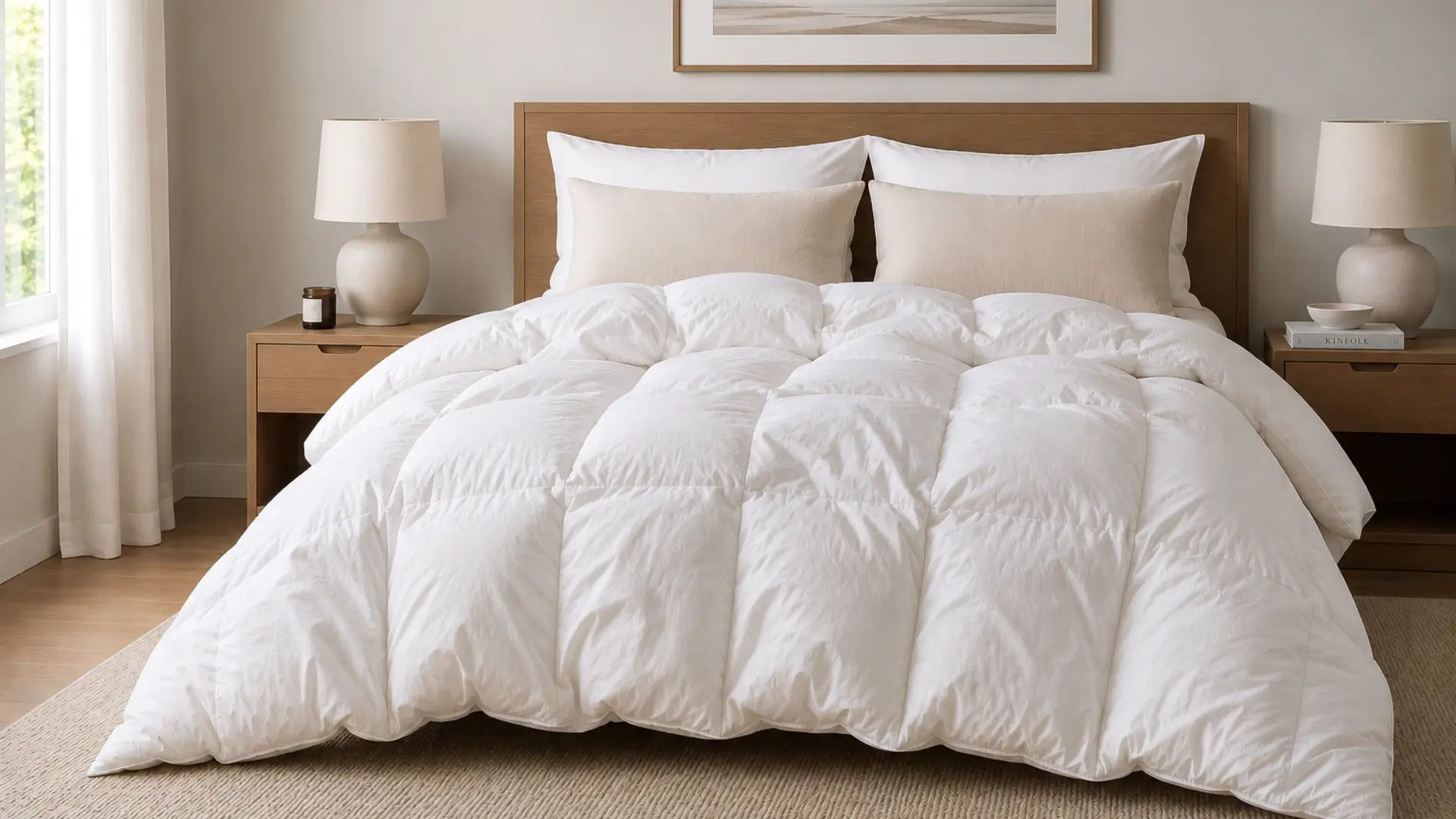
While the two words are often used interchangeably, they are designed differently and suit different situations. A duvet is what we commonly call a “doona” or “quilt” in Australia: a soft insert paired with a removable cover. A comforter is a single quilted bedding layer with the filling sewn inside.
Duvets are ideal for flexible styling and seasonal layering, whereas comforters are better for simple, ready-to-use bedding setups.
In this article, we explore these differences in more detail, offering tips to help you decide which type of cover is best for you.
Jump to:
Quick comparison: duvet vs comforter
Feature
Duvet
Comforter
Main design
Insert with removable cover
One-piece quilted bedding
Warmth
Often warmer and fluffier
Light-medium warmth
Cleaning
Cover can be removed for washing
Entire comforter requires washing
Styling
Covers can be swapped easily
Fixed, sewn-in design
Cost
Insert and cover purchased separately
Single purchase
Best for
Flexible styling, warmth and layering
Low-maintenance or guest bedding
In Australian homes, duvets are commonly preferred for their flexibility across seasons, while comforters are popular for their convenience and ease of use.
What is a duvet?
A duvet is a soft bedding insert filled with materials such as down, feathers, cotton, wool or synthetic fibres. Many Australians also refer to duvets as doonas or quilts, although the terminology can vary by region and retailer. Of course, “quilt” can have its own distinction as a hand- or machine-sewn blanket.
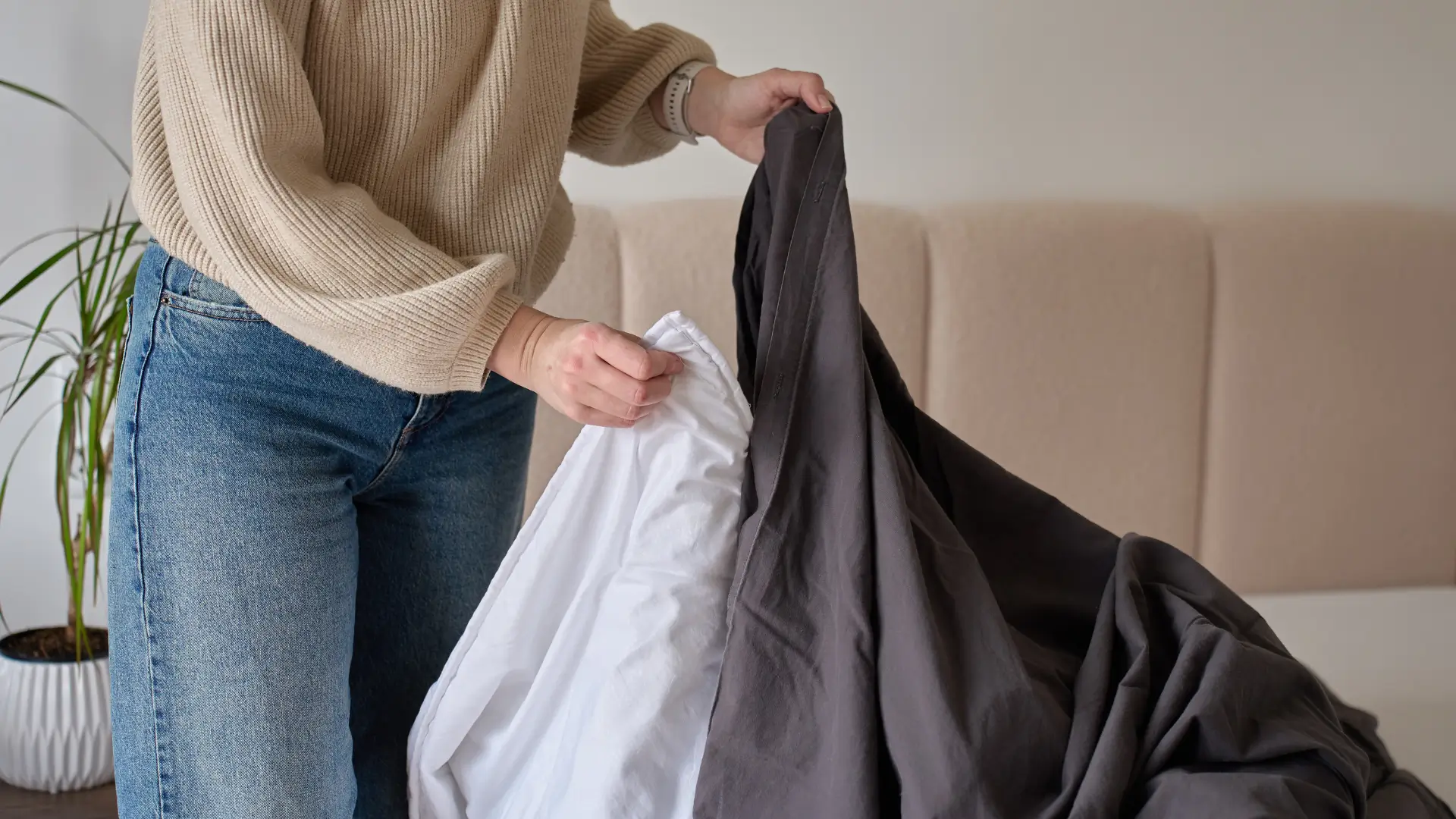
Essentially, a duvet is designed to be used with a removable duvet cover, which protects the insert and allows you to change the look of your bed.
Duvets are popular because they create a plush, layered hotel-style appearance while offering flexibility across different seasons. You can switch to lighter or warmer inserts depending on the climate and your sleep preferences.
Duvet pros:
Better warmth and insulation
Easy to refresh bedroom styling
Removable covers simplify washing
Flexible for seasonal bedding changes
Creates a luxurious layered look
Duvet cons:
Requires purchasing a separate cover
Insert can shift or bunch
Putting covers on can take extra time
Often more expensive initially
What is a comforter?
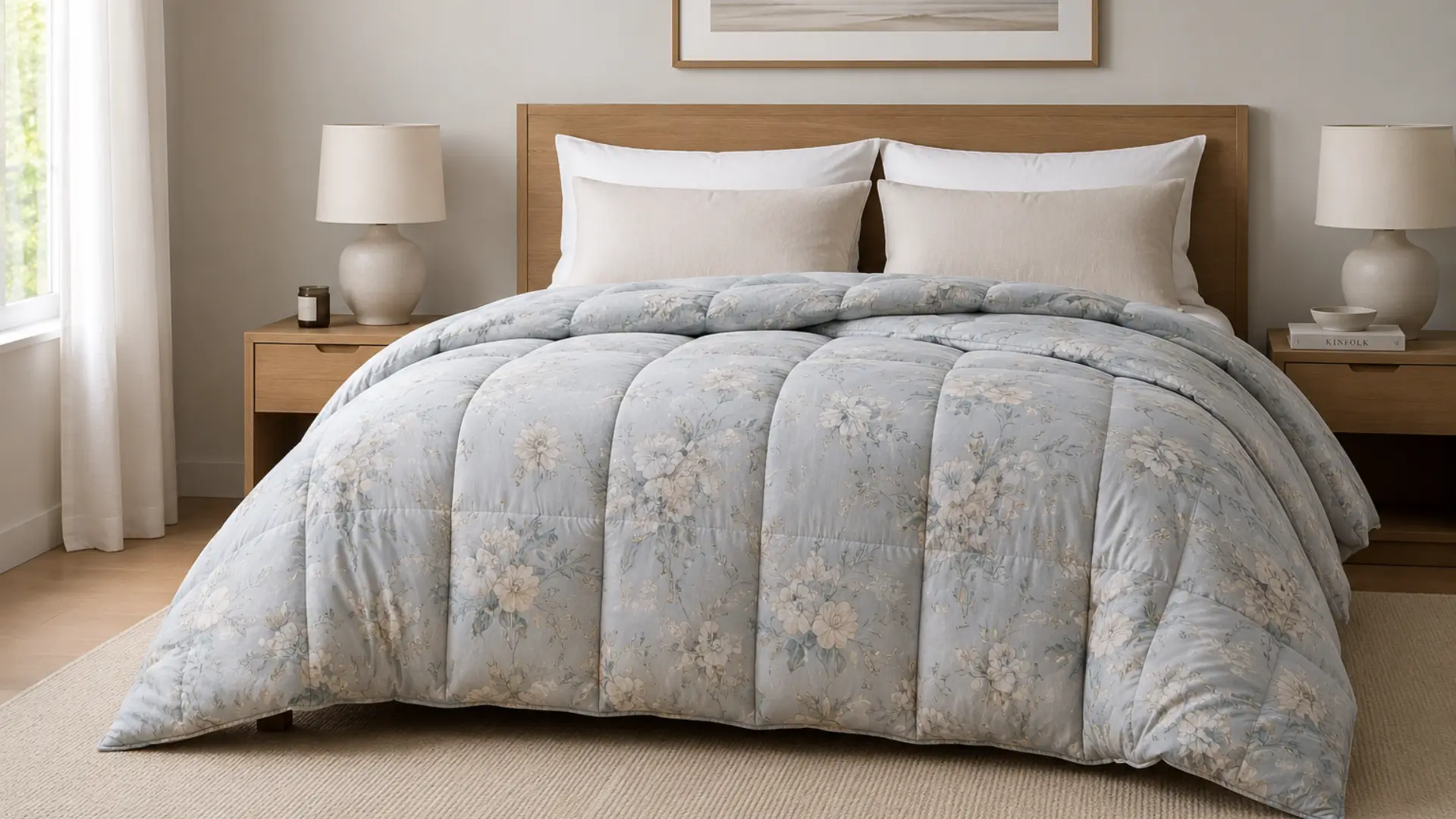
A comforter is a single-piece bedding layer with the outer fabric and inner filling stitched together. Unlike a duvet, it does not usually require a removable cover and is designed to be used straight away.
Comforters are often flatter and lighter than duvets, making them suitable for people who prefer a simpler bedding setup or moderate warmth throughout the year. Because everything is sewn together, comforters are generally lower maintenance day-to-day, though washing them can be more difficult due to their size and bulk.
Comforter pros:
Ready-to-use bedding option
Simple and convenient
Easier daily bed-making
Usually lower upfront cost
Minimal setup required
Comforter cons:
Harder to wash and dry
Less flexibility in styling
Can wear faster due to regular washing
Limited seasonal adaptability
What is the difference between a duvet and comforter?
The main difference between a duvet and a comforter is that a duvet is an insert intended for use with a separate cover, which affects warmth, maintenance, styling flexibility and overall sleep experience.
Warmth and feel
A duvet is often warmer and fluffier because it is designed to hold more loft within the insert. This makes duvets ideal for colder climates, winter layering or people who prefer a cosier sleep environment. Comforters are generally lighter and flatter, making them suitable for moderate temperatures or sleepers who dislike heavy bedding.
Ease of cleaning
Duvets are easier to maintain because the removable cover can be washed regularly without needing to clean the insert as often. Comforters require the entire bedding piece to be washed, which can be more difficult due to the size. A comforter may need to be laundered commercially if it doesn’t fit in your household washing machine.
Styling flexibility
Duvets offer significantly more styling flexibility because covers can be swapped to suit different colours, textures or seasonal bedroom looks. Comforters have a fixed outer design, so changing the appearance usually means purchasing a completely new bedding set.
Cost
Comforters are typically cheaper upfront because they are sold as a single bedding item. Duvets may involve purchasing both the insert and duvet cover separately, though they can offer better long-term flexibility and durability.
Durability
A duvet tends to last longer because the removable cover protects it from direct wear and frequent washing. Comforters may experience faster wear over time because the outer fabric and filling are permanently attached.
Seasonal variability
Duvets are well suited to seasonal changes because inserts can be swapped depending on the weather. Comforters work best for people who prefer a simple year-round bedding setup without changing layers frequently.
Which is better for Australian homes?
For many Australian homes, duvets are often the more flexible choice because they adapt better to changing seasonal temperatures.
In warmer climates such as Queensland or Northern Australia, lightweight breathable duvets can regulate heat while still providing comfort. In cooler regions like Victoria or Tasmania, heavier duvet inserts offer better insulation during winter.
Comforters can work well in milder climates or for sleepers who prefer lightweight bedding with less layering.
Climate
Recommended Bedding
Warm and humid
Lightweight duvet or breathable comforter
Mild year-round
Medium-weight comforter
Cooler regions
Higher-warmth duvet insert
Hot sleepers
Breathable duvet with cooling cover
Cleaning and care
Caring properly for your bedding improves hygiene and nightly comfort, and it can also help your bedding last longer. The below care tips will help you make the most of your duvet or comforter.
Using a removable duvet cover helps protect the insert from sweat, oils and everyday wear.
Duvet covers should generally be washed every 1–2 weeks, depending on usage and personal preference.
Comforters typically require washing every few months unless spills or stains occur.
Airing bedding regularly helps reduce trapped moisture and maintain freshness, particularly in humid climates.
Most bedding should be replaced when:
Filling becomes uneven
Warmth decreases noticeably
Fabric becomes worn or damaged
Allergies or odours persist after washing
Frequently asked questions
Is a duvet the same as a comforter?
No. A duvet uses a removable cover with a separate insert, while a comforter is a single-piece quilted bedding layer.
Do you need a cover for a duvet?
Yes. A duvet is usually designed to be used with a removable cover for protection and easier cleaning.
Which is easier to wash, a duvet or comforter?
Duvets are generally easier to wash because only the cover requires frequent washing.
What is the difference between a duvet, doona and quilt?
These terms are often used interchangeably in Australia. They are typically refer to the same thing, though product construction and warmth levels can vary depending on the brand.
Which is better for hot sleepers?
Lightweight breathable duvets are often better for hot sleepers because inserts can be customised for airflow and temperature regulation.
Which is better for winter?
Duvets are typically better for winter due to their insulation and layering flexibility.