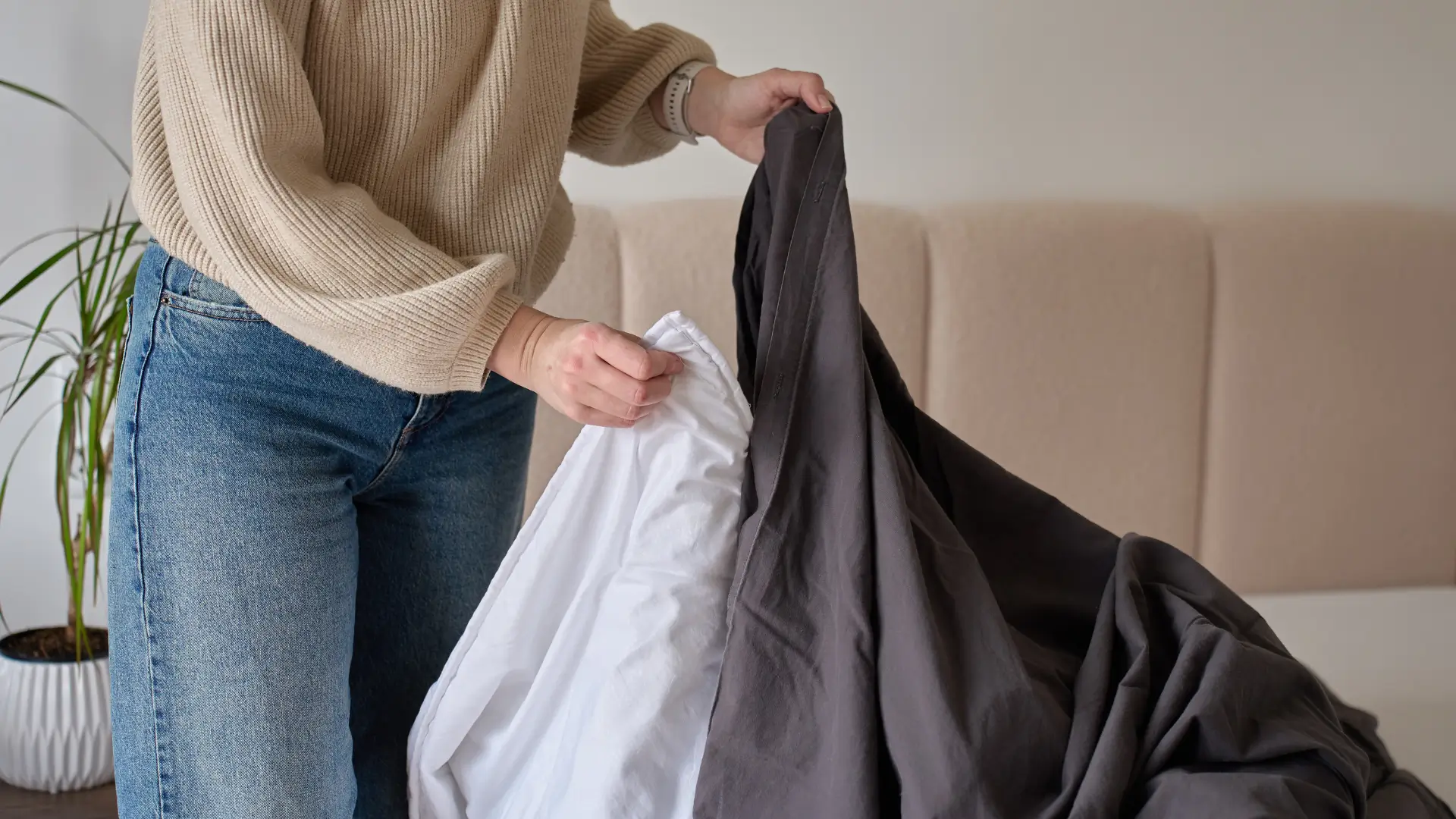
Woman putting on duvet cover

Putting on a duvet cover can be surprisingly difficult, especially if you have a large or bulky doona. Fortunately, there are several tricks to get a cover on quickly and easily, even without a second pair of hands.

Below, we break down two simple methods for putting on a duvet cover: the popular burrito method and the quick inside-out shake method. We explain each of these techniques step by step, followed by some tips and common issues such as slipping, bunching and uneven corners.

Jump to:

Considerations before you get started

In Australia, the term “duvet” is often used interchangeably to mean a doona or quilt. For simplicity, we refer to duvets in this article, but our steps also apply to any doona or thick quilt you’re using inside a cover. Read our article to learn more about the difference between these bedding terms: What is a duvet? Understanding the difference between a duvet, quilt and comforter.

Duvet covers come with a range of fastening options. Depending on the design of your bedding, yours may use buttons, press studs, fabric ties or a zip along the opening. Some covers also include internal corner ties, clips or loops that help keep the duvet from moving around, which will be especially helpful in the below methods.

What you’ll need

Putting on a duvet cover is simple once you know a reliable method. You don’t need any special equipment, but before getting started, make sure you have:

  • Your duvet laid out flat
  • A clean, dry duvet cover in the correct size
  • A clean surface or your prepared bed
  • A little room around the sides of the bed to work

If your duvet cover has internal ties or clips, locate these before you begin.

The burrito or California roll method

The burrito method, sometimes called the California roll method, is a popular way to put on a duvet cover because it avoids having to reach deep inside the cover or repeatedly shake a bulky duvet into position.

Instead, you lay the duvet and cover together, roll them into a bundle and then unroll everything with the duvet neatly enclosed inside. Below, we’ve broken the steps down in an easy-to-follow list.

Turn the duvet cover inside out

Lay the cover flat on the bed, inside out, with the opening positioned at the foot of the bed.

Lay the duvet over the cover

Place the duvet over the cover, lining up the corners and sides. Attach any clips or corner ties if your cover has them.

Roll the layers from top to bottom

Starting at the head of the bed, roll the duvet and cover together towards the bottom, keeping the roll reasonably tight.

Wrap the cover around the roll

Find the duvet cover opening at one end and pull it around the end of the roll. Repeat on the other side, then work the cover over the centre of the roll.

Unroll the bundle

Begin unrolling the bundle back towards the head of the bed. The cover should naturally move into its correct position around the duvet.

Straighten and fasten

Pull each corner to make sure the duvet is sitting evenly inside the cover. Close the fastening at the bottom and give the finished duvet a light shake.

The inside-out shake method

If you want a faster alternative with fewer steps, then you may wish to try the inside-out shake method.

This technique is particularly useful when you’re changing the duvet by yourself or don’t have enough space to spread and roll the bedding. It tends to work best with lighter duvets that are easy to lift and shake.

Turn the duvet cover inside out

Have your duvet ready with its top corners visible. Then, turn the cover completely inside out. If you have any internal loops or ties, secure the top ones at this stage.

Put your hands inside the corners

Place your hands inside the cover and reach into the top two corners. The cover should hang down over your arms, remaining inside out.

Grab the duvet corners

With your hands still inside the cover, grab the corresponding top two corners of the duvet.

Flip and shake the cover down

Holding the corners firmly, lift and shake the duvet. As the cover falls down over the duvet, it should turn right-side out. For a heavier duvet, try shaking it out on the mattress.

Fit the bottom corners

Once most of the duvet is inside the cover, place the bundle down and fit the bottom two corners of the duvet into the corresponding corners of the cover.

Fasten and finish

Close the fasteners and hold the duvet firmly by two corners, giving it a final shake or two to help everything settle evenly.

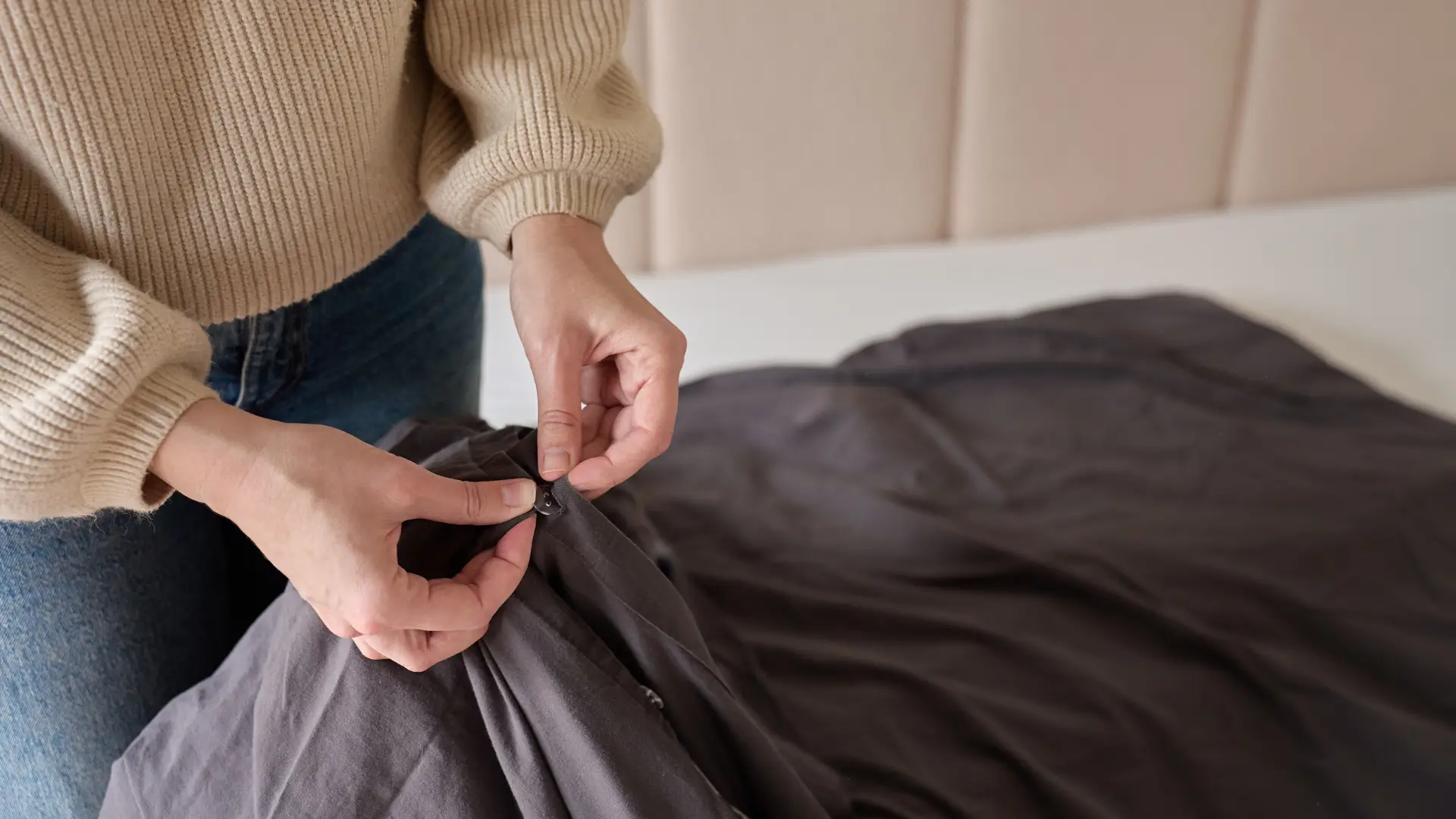
Woman putting on duvet cover and doing up buttons

Tips and troubleshooting

The duvet keeps slipping inside the cover

Make sure the duvet insert and the cover are the same size and that each corner is filled. Otherwise, you may try using internal ties, clips or loops if your duvet cover has them or you’re able to sew them on. Securing the duvet at the corners helps prevent it from gradually moving towards one side.

The cover won’t stretch over the end of the roll

If you’re trying the burrito method, make sure you’ve rolled down towards the duvet cover opening. At the end of the roll, locate the opening and work the cover over one end at a time, rather than trying to stretch it over the whole roll at once.

The duvet and cover don’t line up

This is a common problem with the burrito method. If the corners aren’t aligned properly at the beginning, they’ll usually still be uneven when you finish unrolling. Before you start, take a moment to match all four corners and straighten the edges. If there’s significant difference in size, you may have mismatched bedding, such as a Queen duvet and a King cover.

The duvet gets twisted or bunched while unrolling or shaking

If the duvet starts twisting or folding over itself, stop unrolling or trying to shake the duvet into place. Check that both ends of the cover have been properly wrapped around the roll, or, if using the inside-out method, make sure the duvet corners haven’t come loose out of the cover’s corners.

I accidentally let go of a corner while shaking

If you’ve let go of a corner, there’s no need to restart the process. Lay the duvet on the bed, find the loose corner through the cover and guide it back into the correct place. If your duvet cover has internal ties or clips, securing the top corners before shaking can help prevent this problem.

The cover looks baggy or loose

First, check that the duvet has reached all four corners. If it has and there’s still a lot of loose fabric, confirm that the duvet insert and cover are the same size. Keep in mind that dimensions can vary between products, even when they’re described using the same standard bed size.

Frequently asked questions

What is the easiest way to put on a duvet cover?

For many people, the burrito or California roll method is one of the easiest options because the duvet and cover stay supported by the bed throughout most of the process. It can be especially helpful for large or bulky duvets.

Can I put a duvet cover on by myself?

Some methods make it easier to put a duvet cover without help. The burrito method is useful for larger or heavier bedding because most of the work happens on a flat surface. The inside-out shake method can be quicker for a lightweight duvet.

What if the duvet is too heavy to shake?

Avoid struggling to lift a heavy or bulky duvet. Use the burrito method instead, or keep the duvet supported by the bed while you work the cover over it. A second person can also make handling a large or heavy duvet easier.

How do you stop a duvet from moving inside its cover?

Attach any internal ties, loops or clips before closing the cover. It also helps to use a cover that matches the dimensions of your duvet and to make sure all four corners are properly aligned.

Is the burrito method better than the inside-out method?

The best method depends on your situation. The burrito method is a good choice for larger or heavier duvets and keeps most of the process on the bed. The inside-out shake method is quick and convenient for lighter duvets, particularly when you’re working alone or have limited space.