How does sharing a bed affect your sleep? New insights from our latest research.
24/04/2026
At Sealy, we are constantly exploring new ways to better understand and improve sleep.
As part of our ongoing collaboration with the QUT Sealy Centre for Biomechanics and Sleep Research, we recently supported a deep dive to help understand the ways sharing a bed impacts our sleep. This research, now published in J. Sleep Health and featured in New Scientist Magazine, offers valuable new insights into the complex dynamics of co-sleeping with a partner.
We’re proud to have contributed to this important work, and we thank Dr Lionel Rayward and Associate Professor Paige Little for their collaboration in helping advance sleep science.
How does sharing a bed really affect your sleep?
The answer is more nuanced than you might expect.
Your Partner Does Disturb Your Sleep More Than You Realise
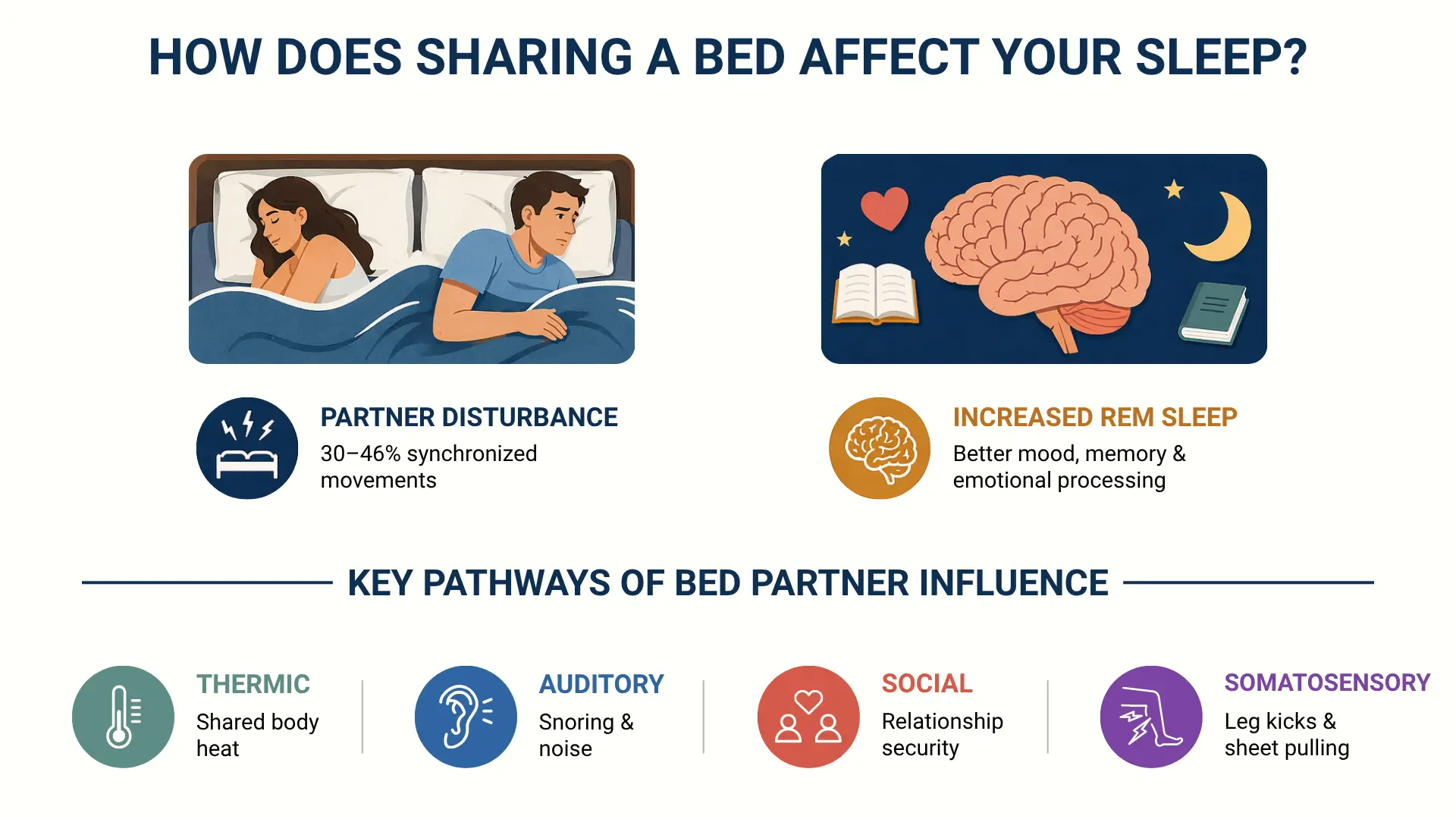
Researchers found that 30–46% of nighttime movements are synchronised between partners. In practical terms, this means that when one person moves, whether it’s a leg kick, shifting position, or pulling the sheets, it often triggers movement in the other.
More Disturbance Doesn’t Always Mean Worse Sleep
Interestingly, co-sleeping is also associated with increased REM sleep – a critical stage linked to emotional processing, memory consolidation, and mood regulation.
This suggests that while partners may disrupt each other physically, there can also be meaningful psychological and physiological benefits to sharing a bed.
Four Key Ways A Partner Influences Your Sleep
The review identified four main pathways through which bed partners affect each other’s sleep. These are summarised as:
Thermic: Shared body heat can help regulate temperature and may support deeper sleep.
Auditory: Sounds such as snoring or breathing can increase awakenings.
Social: Feelings of relationship security and closeness can promote more stable sleep.
Somatosensory: Physical interactions like movement, contact or sheet pulling can trigger sleep disruptions.
A personalised approach to better sleep
One of the key takeaways from this research is that co-sleeping isn’t simply “good” or “bad”.
For some, the emotional comfort of sleeping with a partner may outweigh physical disturbances throughout the night. For others, small disturbances can inhibit restful sleep, and small adjustments (such as mattress choice, bedding or sleep positions) can make a significant difference to their nightly rest.
At Sealy, these insights reinforce the importance of personalised sleep solutions, helping people minimise disturbance while preserving the social and emotional benefits of sleeping together.